You got to suffer if you want to play the blues
When I was a young musician in New Haven Connecticut in the early 1970's, we had a saying: "You got to suffer if you want to play the blues". When facing the struggle, disappointment, and pain that are a large part of a musician's life, this maxim -- nearly always stated with a bit of tongue-in-cheek, yet never without an awareness of the deep truth it expressed -- like the music itself brought comfort.
A half-century later, as a software developer studying Machine Learning, I've been listening to the recent proliferation of AI-created1 and AI-assisted music with great interest. As so often happens in the tech world, there is a trade-off. The most technologically impressive sounds are rather disappointing from a musical perspective; the pieces that stand out musically are those in which a human performer has a more direct role.
This leads me to raise a different but related set of issues.
- Could a sentient, self-aware artificial intelligence create original music?
- Would that intelligence appreciate human music, or perceive it as meaningful?
- Would the AI have any need to create?
- Might humans understand, or even be aware of, such a mind's creations?
At least half of the meaning of any work of art lies in the mind of its audience. Also, the idea that nearly any work of art has strong sexual content is difficult to refute. I remember hearing a theater director say, "Theater is sex. I love it!". I've heard countless musicians say that music is sex; and the sexual content of works of visual art is much of their power, at least to me.
What, I wonder, might serve to replace this primal yearning in an artificial soul? Could a machine need to create music, or need to listen to music? Can we create a machine with those needs? Dare we?
"The heartache ... that flesh is heir to" is a powerful motivator of art. For an intelligent machine to create original music, its designer would have to imbue it with the capacity for suffering. Not only would that involve serious ethical issues, it might also have negative (to the human) consequences. Anger is a natural response to pain. Even today's crude machines can kill with ruthless efficiency; we might anger our sentient creations at our peril.
Interspecies communication via art is possible. Humans hear music in the song-speech of whales, and in the territorial and mating calls of birds. My dog Jasper, a black lab/shepherd mix, would sing to the wail of an ambulance siren: softly when the siren was in the distance, in full voice as the sound drew near. She would sing along with my saxophone, her wagging tail displaying her joy in this duet.
Inorganic intelligence created by humans would inevitably bear our stamp -- witness the facial recognition algorithms tainted by racism. Could music, created entirely by machines, be enjoyable / meaningful / comprehensible to humans? Might we even be completely unaware of some medium in which they chose to create art?
One day, our creations might become our heirs. I would wish for them an inalienable right to control their own destiny, independently of human concerns. I would also with for them (or it, if a collective intelligence were to evolve) the joys of love and of art in some form.
Some might view these ideas as hopelessly fantastic; others would consider their eventual realization to be inevitable. I have at present many more questions than I do answers; but I expect our creation(s) to one day eclipse us as the most advanced intelligence in this corner of the galaxy.
More power to them.
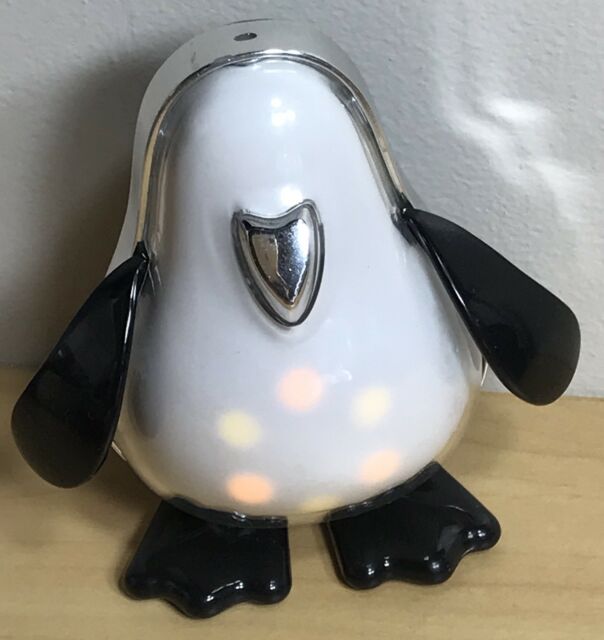
ICY Robotic Dancing Penguin; Hasbro 2006
- Note the rich relationship between the words "art" and "artificial" ↩